

[Nissan Skyline GT-R. Image credit: Collecting Cars]
The JDM 25-year rule is opening a new chapter for Japanese performance cars. From the Nissan Skyline GT-R to the Mazda RX-7 and Mitsubishi Lancer Evolution, another generation of Japanese modern classics is becoming eligible for import into the United States.
These cars represent a period when Japanese manufacturers pursued different approaches to performance, from high-revving naturally aspirated engines to turbocharging, advanced four-wheel-drive systems and lightweight sports-car engineering.
Although the 25-year rule is American, its influence extends well beyond the US. Britain has an established Japanese import scene, and as more models become eligible for American registration, their history, condition and movement between countries take on greater significance.
So how does the rule work, which cars are becoming eligible in 2026 and 2027, and what does it mean for UK owners?
Key takeaways
- The JDM 25-year rule allows qualifying Japanese cars to enter the US without meeting its normal federal vehicle safety standards once they reach 25 years old.
- During 2026, vehicles manufactured in 2001 become eligible month by month, with 2002 examples following in 2027.
- The UK has no equivalent 25-year import restriction, although customs, VAT and registration requirements still apply.
- Customs-bonded storage allows qualifying imported vehicles to be held in Britain with customs duty and import VAT suspended.
- Originality, documented history and appropriate storage are important considerations for Japanese modern classics, particularly those driven only occasionally.
What is the JDM 25-year rule?

The JDM 25-year rule refers to a US exemption that allows vehicles at least 25 years old to be imported without having to comply with the Federal Motor Vehicle Safety Standards (FMVSS) normally required for vehicles entering the country.
JDM stands for Japanese Domestic Market, describing vehicles originally produced for sale in Japan. Many of these models were never officially available in America, or were sold there in different specifications.
The exemption is based on a vehicle’s actual date of manufacture, rather than simply its model year. A car manufactured in August 2001, for example, reached the 25-year threshold in August 2026.
There are three important distinctions:
- Safety and emissions are separate. The 25-year exemption covers US federal safety standards. Separate Environmental Protection Agency (EPA) requirements apply, with an exemption generally available for qualifying vehicles at least 21 years old that retain their original engine configuration.
- State rules may differ. Meeting federal import requirements does not automatically guarantee registration in every US state.
- The rule is not exclusive to Japanese cars. It applies to qualifying vehicles manufactured anywhere in the world.
The UK does not have the same 25-year restriction. Japanese cars can be imported into Britain at younger ages, subject to the relevant customs, vehicle approval and registration requirements.
Which Japanese modern classics become eligible in 2026 and 2027?

[Subaru Impreza WRX. Image credit: Car & Classic]
The 25-year threshold is now moving through the final years of several Japanese performance-car generations.
During 2026, vehicles manufactured in 2001 reach eligibility month by month. Cars built in 2002 follow during 2027.
Nissan Skyline GT-R R34 (1999–2002)
The R34 Skyline GT-R combined Nissan’s RB26DETT twin-turbocharged straight-six with the ATTESA all-wheel-drive system and a six-speed manual gearbox. Its engineering, motorsport history and distinctive styling established a following well beyond Japan.
The earliest R34 GT-Rs became eligible for US import in 2024. Later variants, including the V-Spec II and M-Spec, are reaching the threshold as their individual manufacture dates turn 25 years old.
Mitsubishi Lancer Evolution VII (from 2001)
Introduced in 2001, the Evolution VII continued Mitsubishi’s development of rally-derived four-wheel-drive performance cars. Its turbocharged 4G63 engine, active centre differential and four-door bodywork gave it a different character from conventional two-seat sports cars.
The earliest examples reach the US 25-year threshold during 2026.
Honda Integra Type R DC5 (2001–2006)
The Japanese-market DC5 Integra Type R featured Honda’s high-revving K20A VTEC engine, a six-speed manual gearbox and a chassis developed for precise handling. Unlike the more powerful turbocharged cars of the same period, the Integra relied on engine response, gearing and relatively low weight.
Introduced in 2001, early examples become eligible during 2026.
Subaru Impreza WRX STI GDB (from 2000)
The second-generation Subaru Impreza WRX STI continued the company’s close association with rallying. Its turbocharged boxer engine, all-wheel-drive system and distinctive bodywork made it familiar to enthusiasts in Japan, Britain and beyond.
Japanese-market versions included specifications that differed from those available overseas. Early GDB models have already passed the 25-year threshold, with 2001-built cars following throughout 2026.
Nissan Silvia S15 (1999–2002)
The final generation of the Silvia combined compact dimensions, rear-wheel drive and, in turbocharged Spec-R form, Nissan’s SR20DET engine. Its balanced chassis and relatively simple mechanical layout helped establish a following among road-driving and motorsport enthusiasts.
Cars manufactured in 2001 and 2002 reach the US import threshold during 2026 and 2027 respectively.
Mazda RX-7 Spirit R (2002)
The third-generation Mazda RX-7 used a twin-rotor rotary engine, sequential turbocharging and a lightweight rear-wheel-drive layout. The Spirit R was introduced in 2002 as a final edition of the FD RX-7, with distinctive specifications marking the end of production.
These cars reach the 25-year threshold during 2027.
Why are JDM modern classics attracting continued interest?

[Mazda RX-7 Spirit R. Image credit: Piston Heads]
The appeal of Japanese modern classics goes beyond their age.
During the 1990s and early 2000s, Japanese manufacturers developed performance cars with quite different mechanical characteristics.
Nissan’s turbocharged straight-six engines, Honda’s naturally aspirated VTEC units, Subaru’s boxer engines and Mazda’s rotary technology each offered a different driving experience.
Many of these cars also reflect an era before electronic driver assistance became as widespread as it is today. Manual gearboxes, hydraulic steering, compact dimensions and relatively direct controls remain part of their appeal.
Motorsport and popular culture played a role too. Rallying, touring-car racing, video games and films introduced these models to an international audience, often long before some could legally be imported into the United States.
For enthusiasts who grew up with them, these are cars associated with a particular period of automotive design and engineering.
Why does the American 25-year rule matter to UK owners?
Britain has a longstanding relationship with Japanese performance cars.
Right-hand-drive vehicles have always been well suited to UK roads, and specialist importers, workshops and owners’ clubs have supported the Japanese domestic market for decades.
The US 25-year rule brings another audience into that established international community.
As successive production years become eligible, American enthusiasts can consider vehicles already in Japan or other markets, including Britain.
For an existing owner, this makes a car’s history and documentation particularly relevant.
Originality. Many Japanese performance cars have been modified during their lives. Understanding previous changes and retaining original components where possible helps preserve an accurate record of the vehicle.
Provenance. Japanese export certificates, auction sheets, service records and previous ownership details can help establish a car’s background.
Condition. Corrosion, accident repairs, mechanical modifications and lengthy periods of inactivity are all important considerations, particularly when a vehicle is purchased remotely.
These factors matter whether a car remains in the UK, is exported to America or is simply being kept and enjoyed by its current owner.
How does importing a car from Japan to the UK work?

[Honda Integra Type R DC5. Image credit: M R SportsCars]
Unlike the United States, Britain does not require a Japanese vehicle to be 25 years old before it can be imported.
Importing a car from Japan to the UK generally involves arranging shipping, making a customs declaration, addressing import duty and VAT, notifying HMRC and completing the relevant registration requirements.
There are several important considerations:
- Vehicle approval. Cars more than ten years old are generally exempt from vehicle approval, although the relevant requirements and exemptions should be checked.
- Customs duty. The applicable rate depends on the vehicle’s classification, origin and any preferential treatment or relief for which it qualifies. A reduced rate should not be assumed without checking eligibility and documentation.
- Import VAT. The standard rate is generally 20%, calculated on the relevant value of the vehicle and applicable additional costs, unless a relief applies.
- Registration. HMRC notification, usually through the Notification of Vehicle Arrivals (NOVA) process, and the appropriate DVLA, MOT and insurance requirements must be addressed before the car can be used on UK roads.
Certain historic collectors’ vehicles may qualify for different customs treatment, but being 25 years old does not automatically establish eligibility.
For further detail on import duty, VAT, customs procedures and registration, read our guide to importing a supercar into the UK.
How does customs-bonded storage work for a Japanese import?
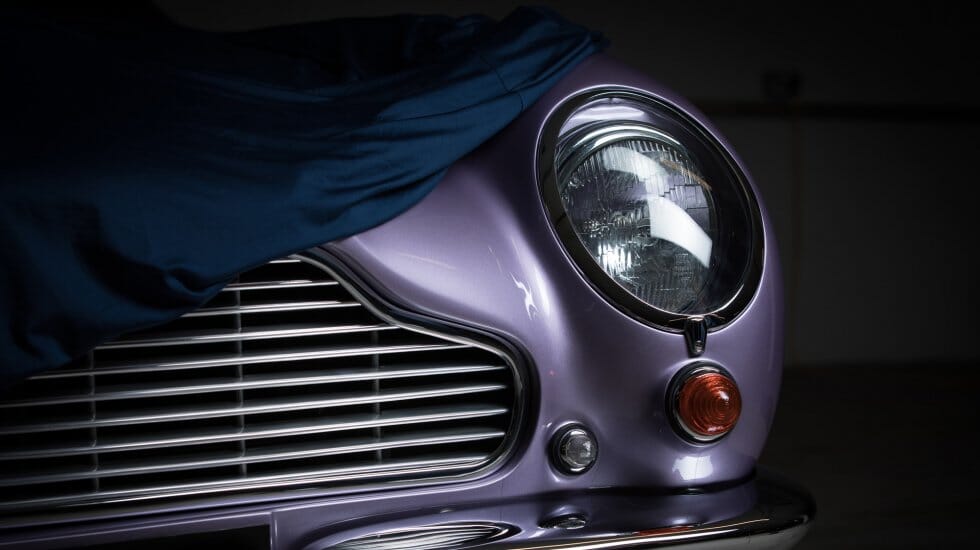
For an owner who has purchased a Japanese modern classic but has not yet decided where it will ultimately be registered or used, customs-bonded storage can provide flexibility.
An HMRC-authorised Customs Warehouse allows qualifying imported vehicles to be held under a customs warehousing procedure, with customs duty and import VAT suspended while the vehicle remains under customs control.
This can be useful in several situations.
An owner considering UK registration. The car can remain in authorised storage while the owner decides whether to release it for use in Britain.
A vehicle destined for another country. A car can be stored before being re-exported. Provided the correct customs procedures are followed, suspended UK import charges will generally not become payable.
An international collection. An overseas owner may wish to keep a vehicle in Britain without immediately releasing it for permanent UK use.
Customs warehousing is a suspension arrangement, not an automatic exemption from tax.
If a vehicle is released into UK free circulation, any applicable duty and import VAT become payable. While it remains under the procedure, the vehicle is subject to customs control and cannot simply be driven or removed for private use.
The customs and storage arrangements should therefore be agreed before the vehicle is shipped.
Our guide to HMRC Customs Warehouses explains the arrangements in more detail.
How should a Japanese modern classic be stored?

A Japanese performance car approaching 25 or 30 years old needs the same considered care as any established classic, particularly if it is driven only occasionally.
Long periods of inactivity can affect batteries, tyres, brakes and mechanical components. Moisture and changing environmental conditions can also contribute to corrosion and deterioration of electrical connections, bodywork and interior materials.
Appropriate Japanese import storage should address several areas:
- Battery health. Suitable battery conditioning helps maintain charge and avoid problems associated with prolonged discharge.
- Humidity control. A stable, carefully managed environment helps limit moisture-related deterioration.
- Tyre care. Correctly managed tyre pressures and appropriate support help reduce the risk of flat spots during extended periods of storage.
- Mechanical condition. Fuel, fluids, seals and other components may need model-specific attention during longer periods off the road.
- Bodywork and interiors. Careful cleaning, thorough drying and breathable protection help preserve finishes and materials.
- Documentation. Import records, maintenance history and original components should be kept safely together.
Certain models, particularly rotary-engined Mazdas and heavily modified turbocharged cars, may benefit from specialist advice before prolonged storage.
The aim is not simply to leave the vehicle somewhere secure, but to ensure that it receives the right attention while it is not being driven.
Frequently asked questions
Does the JDM 25-year rule apply in the UK?
No. The JDM 25-year rule is a US federal vehicle import exemption. Britain has no equivalent minimum-age requirement for importing Japanese cars, although customs, vehicle approval and registration rules still apply.
Is the 25-year rule based on model year or manufacture date?
The rule is based on the vehicle’s actual date of manufacture. A car manufactured in August 2001 reaches the US 25-year threshold in August 2026, regardless of its advertised model year.
Which Japanese cars become eligible for US import in 2027?
Examples include the Mazda RX-7 Spirit R, later Nissan Skyline R34 GT-Rs and final-production Nissan Silvia S15s manufactured in 2002. Each car becomes eligible once it reaches 25 years from its date of manufacture, provided other applicable import requirements are satisfied.
Does a Japanese car need an IVA test in the UK?
Cars more than ten years old are generally exempt from vehicle approval. The relevant exemption and applicable DVLA registration, MOT and other requirements must still be met.
Can a Japanese import be stored in the UK without immediately paying import VAT?
Yes. Where a vehicle is correctly entered into an HMRC-authorised customs warehousing procedure, import duty and VAT can remain suspended while it stays under customs control. Any applicable charges become payable if the car is subsequently released into UK free circulation.

[Mitsubishi Lancer Evolution VII. Image credit: Evo]
The Japanese performance cars of the early 2000s were built for a different era, but their combination of engineering, character and driver involvement continues to appeal to enthusiasts around the world.
For owners importing a Japanese modern classic, or looking for somewhere to keep one, Windrush Car Storage provides secure, climate-controlled storage in London and the Cotswolds. Our vehicle induction process, monitored humidity, dedicated storage bays and ongoing checks are designed to keep cars properly cared for between drives. We can also arrange servicing, inspections and specialist work through our trusted partners.
Both facilities are HMRC-authorised Customs Warehouses, allowing qualifying imported vehicles to be stored with duty and VAT suspended while their owners decide what comes next.
If you are importing a Japanese car or need storage for an existing vehicle, get in touch with the Windrush team to discuss your requirements.