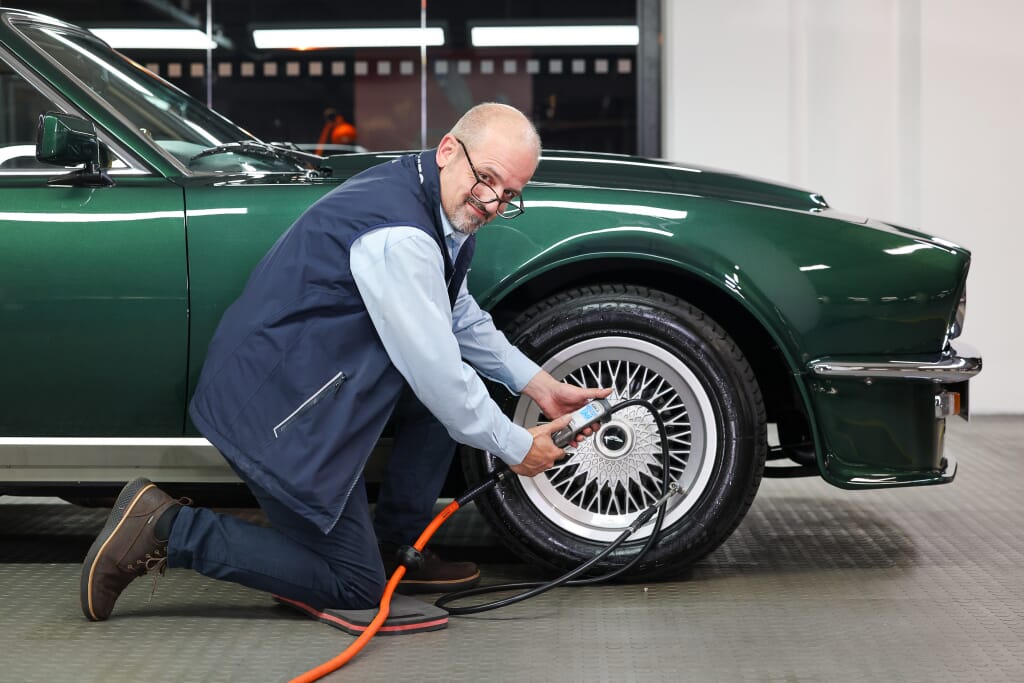

Winter car storage is about more than finding somewhere to park until spring. The right preparation and ongoing care help protect a car’s condition and make returning it to the road a straightforward process. Whether you’re preparing a car in your own garage or entrusting it to a specialist, the priorities are the same: control moisture, maintain the battery, look after the tyres and address any maintenance needs. Professional storage brings those tasks together, with checks and care throughout the winter.
This guide draws on more than 20 years of looking after classic and modern cars at Windrush.
Why is winter storage important for classic cars and supercars?

Winter brings moisture, road salt and changing temperatures – all of which can affect a cherished car. Salt can collect in seams, sills and brake components, encouraging corrosion if it is left untreated. Temperature changes can also cause condensation when moist air meets cold surfaces, including bodywork and components beneath the car.
A garage or barn provides shelter, but keeping the rain out does not necessarily mean keeping the car dry. Without suitable humidity management, damp conditions can still affect metalwork, electrical components and interior materials.
When should you put your car into winter storage?
Ideally, before the roads are gritted, so the car enters storage without salt contamination. For many owners, that means October or November, depending on the weather and how much use the car still gets. Before the final clean, take the car for a drive long enough to bring the engine and oil fully up to operating temperature. This also provides an opportunity to identify any faults that should be addressed before storage.
Once washed, allow the car to dry thoroughly, including areas where water can collect, before covering it.
How do you prepare a car for winter storage?

Use the following checklist as a starting point. The details will differ between a 1960s classic and a modern supercar, so always follow the manufacturer’s instructions where these specify a particular procedure.
- Wash and dry thoroughly, including underneath where appropriate. Remove salt, road film and bird lime, paying attention to wheel arches and other areas that trap dirt or moisture. Never cover a damp car.
- Address stone chips and paint damage. Exposed metal is vulnerable to corrosion, so arrange suitable repairs or protection before storage.
- Review servicing and oil-change requirements. If a service or oil change is due, consider completing it before storage. Otherwise, follow the manufacturer’s schedule, including time-based intervals.
- Check coolant and brake fluid. Confirm that the coolant has the correct concentration and specification, and that coolant and brake-fluid changes are up to date.
- Prepare the fuel system. Use suitable fresh fuel and follow the vehicle’s guidance on tank level and any additives.
- Check the tyres. Follow the vehicle manufacturer’s or tyre maker’s storage-pressure guidance and inspect their condition.
- Follow the parking-brake instructions. On some older cars, releasing the handbrake and securely chocking the wheels on a level surface can help prevent sticking. Modern electronic parking brakes may require a specific procedure.
- Arrange battery maintenance. Use an appropriate automatic maintainer and the correct connection points.
- Clean the interior. Vacuum thoroughly and remove food, damp clothing and other items that could encourage moisture or pests. Use care products appropriate to the materials fitted.
- Reduce the risk of pests. Address entry points into the building, keep food away and inspect the car periodically.
- Check the wiper blades. Make sure they are clean and in good condition.
- Fit a suitable cover. Choose a clean, breathable, well-fitting indoor cover, and use it only once the car is fully dry.
What fuel should you use for winter car storage?

Standard 95-octane unleaded petrol in Great Britain has been E10 since September 2021, meaning it can contain up to 10% ethanol. Super unleaded labelled E5 contains up to 5%.
For older cars, fuel compatibility matters. Ethanol can affect some traditional fuel-system materials, so check the vehicle’s requirements and the label at the pump. E5 super unleaded is often the appropriate forecourt choice for classics that are unsuitable for E10. Its higher octane rating does not, by itself, mean the fuel will keep longer. Specialist fuels are another option. Coryton’s SUSTAIN Classic range, for example, is formulated with less than 1% bio-ethanol. Any specialist fuel or stabiliser should be suitable for the vehicle and used according to the supplier’s instructions.
For many petrol and diesel cars, storage guidance recommends a nearly full tank to reduce the air space in which condensation can form. Follow the manufacturer’s recommendation, leave room for fuel expansion and avoid overfilling. If using a suitable stabiliser, add it before the final drive so the treated fuel can circulate through the system.
How do you maintain a car battery during winter storage?

Use a manufacturer-approved automatic battery maintainer suitable for the battery fitted to the car, whether conventional lead-acid, AGM or lithium. The correct charging programme matters, particularly with lithium batteries. Follow the handbook’s instructions on connection points and settings, and use the manufacturer-supplied maintainer where appropriate.
Modern cars continue to draw power while parked, through alarms, trackers and control units. Keeping the battery properly maintained helps prevent deep discharge and the inconvenience or electronic problems that can follow. Where no power supply is available, seek advice on the appropriate storage procedure. Disconnecting the battery may suit some cars, but it can affect alarms, trackers, access systems and settings. Check both the handbook and any insurance requirements before doing so.
How do you prevent tyre flat spots during storage?
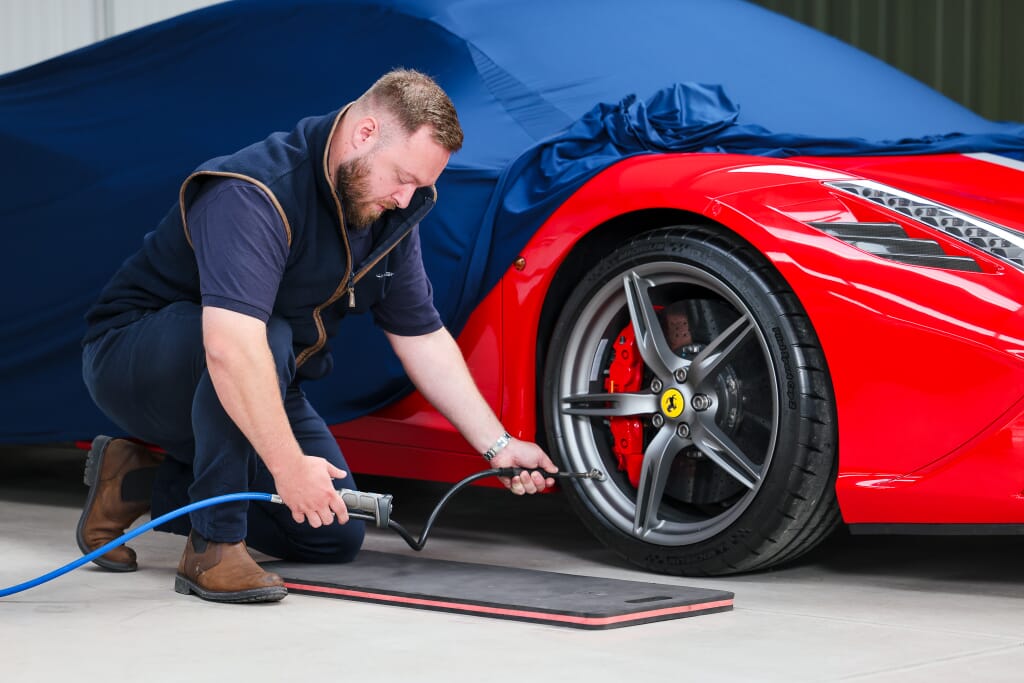
A car standing in one position for an extended period can develop tyre flat spots. Some are temporary and disappear as the tyres warm up in normal use; others may persist. Follow the vehicle manufacturer’s or tyre maker’s recommendations for storage pressures, and check them regularly. Avoid adopting a generic higher pressure simply because the car will be parked for several months.
Where recommended, periodically repositioning the car changes the part of the tyre carrying the load. This should be done safely and without repeatedly starting the engine for brief movements. If pressures have been adjusted specifically for storage, leave a clear reminder inside the car and reset them before driving.
How do you protect paint, chrome and carbon fibre?
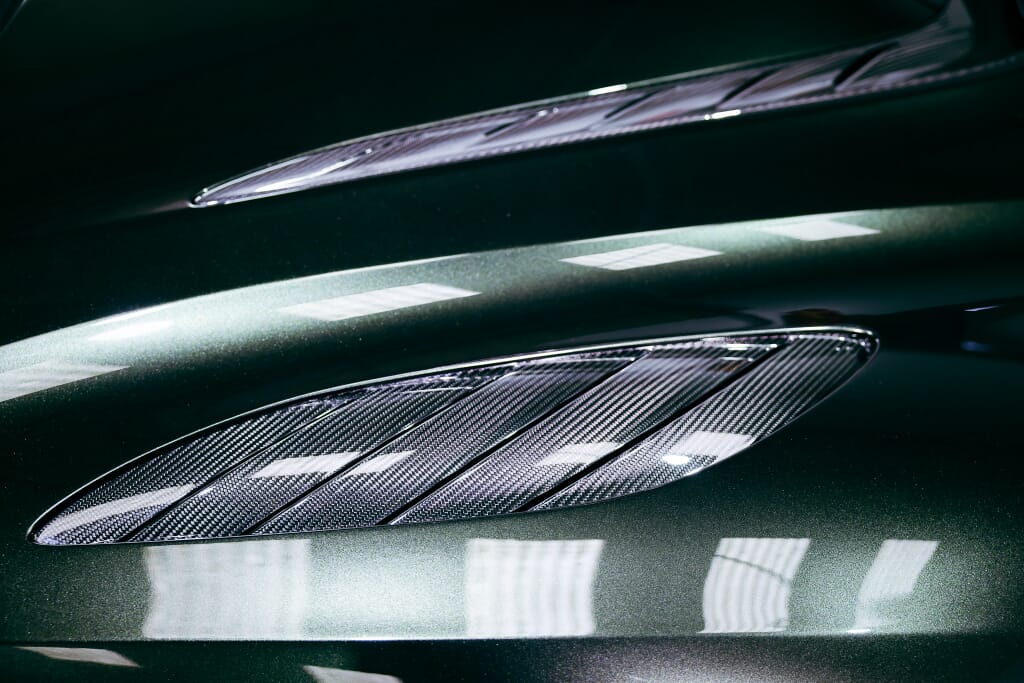
Start with clean, dry surfaces and use products suited to the finish.
- Paint: Apply a suitable wax or sealant where appropriate. For ceramic-coated cars, follow the coating supplier’s maintenance instructions.
- Chrome: Clean and dry it carefully, then apply an appropriate protectant, particularly around vulnerable trim and wire wheels.
- Gloss carbon fibre: Care depends on its surface coating. Lacquered carbon can generally be cleaned and protected using products suitable for that lacquer; seek specialist advice before abrasive polishing.
- Matte or satin finishes: Use products specifically approved for the finish. Conventional waxes and gloss-enhancing products can alter its appearance.
- Leather and interior trim: Use material-appropriate cleaners and apply conditioners only where recommended.
- Rubber seals and fabric roofs: Use separate products designed for each material. Store convertibles with the roof clean, fully dry and raised, unless the manufacturer advises otherwise.
A suitable cover provides additional protection from dust and accidental contact. It should fit securely without rubbing against the bodywork, and its inner surface must remain clean.
What are the ideal conditions for winter car storage?

Look for a dry, secure space with controlled humidity and reasonably stable conditions. Condensation can form when moist air meets a surface below its dew point. Repeated exposure to damp conditions can encourage corrosion, electrical problems and deterioration of interior materials.
Dehumidification and air circulation serve different purposes. A dehumidifier removes moisture from the air. An air chamber can provide filtered airflow and a protective enclosure, but its ability to manage moisture depends on the system and surrounding conditions. In a home garage, a correctly sized dehumidifier suited to the operating temperature can help, particularly where the space is reasonably well sealed. Check humidity levels rather than assuming that a building which feels dry is suitable.
Indoor storage is generally preferable. If outdoor storage is unavoidable, use a purpose-designed, weatherproof and breathable cover that fits securely, and inspect the car regularly.
Should you start a stored car during winter?
Avoid repeatedly starting the engine for a few minutes and then switching it off. Brief running may leave moisture in the engine and exhaust without bringing the oil fully up to temperature. If the car is to be exercised, choose suitable conditions and drive it long enough to reach normal operating temperature, following any model-specific guidance. Avoid salted roads where possible.
Otherwise, follow the vehicle’s storage procedure, maintain its battery appropriately and continue regular condition checks.
Can you store an electric or hybrid car over winter?
Yes, but follow the manufacturer’s instructions closely. Recommended charge levels, charging arrangements and standby settings vary between models.
Check the guidance on:
- The high-voltage battery’s recommended storage charge level.
- Whether the car should remain plugged in.
- Any settings needed to reduce standby power consumption.
- How the low-voltage battery is maintained.
Do not assume that a transport mode is suitable for long-term storage. Use only the procedure specified for the vehicle.
Hybrid supercars also need model-specific care: their high-voltage and low-voltage systems may have separate maintenance requirements.
Do you need to tell your insurer or the DVLA?
Speak to your insurer before changing how or where the car is stored. Confirm the storage address, security arrangements and any requirements concerning alarms, trackers or battery disconnection. Some specialist insurers offer laid-up cover for vehicles kept off the road. Check exactly what the policy includes, particularly if the car may be moved, transported or taken out for maintenance.
If you stop taxing the vehicle while it is kept off public roads, you must make a Statutory Off Road Notification, or SORN. Public-road use is then restricted to permitted journeys, such as travelling to or from a pre-booked MOT or other testing appointment. Appropriate insurance and roadworthiness requirements still apply.
Before returning to normal road use, make sure the car is taxed, insured and has a valid MOT where required.
How do you bring a car out of winter storage?

Before starting or driving, work through a few straightforward checks:
- Inspect the engine bay and accessible intake areas for pests, nests or obstructions.
- Look underneath for leaks.
- Check tyre condition and reset pressures to the correct road-use settings.
- Check fluid levels according to the handbook.
- Confirm that the battery is sufficiently charged and disconnect the maintainer correctly.
- Check that the brakes operate normally before setting off.
- Confirm that servicing, tax, insurance and MOT requirements are up to date.
Light surface rust on conventional iron brake discs may clear with careful brake use. Persistent noise, vibration, sticking or reduced braking performance needs investigation.
Keep the first drive unhurried, allow the car to warm through properly and respond to any warning lights or unusual behaviour.
What are the benefits of professional winter car storage?

Preparing a car properly is only the beginning. Its environment and care during the following months also matter. Professional storage brings suitable conditions together with a planned programme of inspections and maintenance, reducing the need for owners to manage each task themselves.
The benefits can include:
- A controlled environment: Humidity is managed throughout the storage period.
- Battery care: Suitable maintenance charging supports battery condition and readiness.
- Regular inspections: Checks help identify issues such as pressure loss or fluid leaks before they develop further.
- Security: Purpose-designed facilities provide monitored storage and controlled access.
- Managed maintenance: Servicing, MOTs and specialist work can be arranged while the car is not being used.
At Windrush, we care for classic cars, supercars and cherished vehicles at our specialist facilities in West London and the Cotswolds. Alongside secure, dehumidified storage and regular vehicle checks, we arrange servicing, MOTs and specialist maintenance for many of our clietns through trusted partners.
Whether you need storage for the winter or care throughout the year, contact the Windrush team to discuss your requirements or arrange a visit.