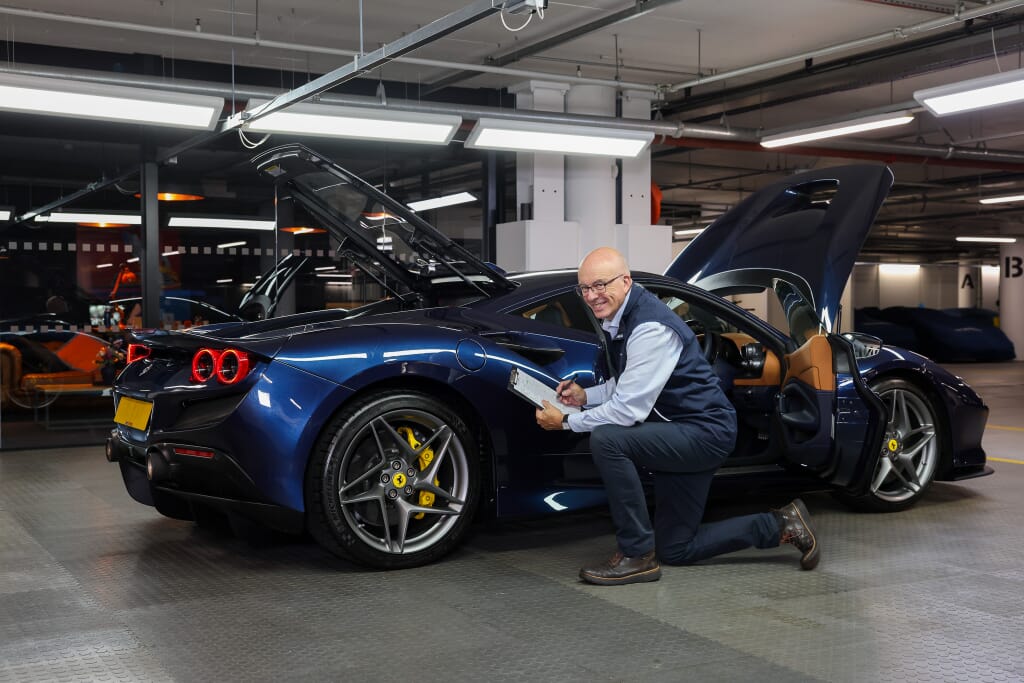

Spring has arrived, and for car enthusiasts across London and the Cotswolds, that familiar itch is setting in. The evenings are stretching, the roads are quietening of winter traffic, and somewhere in a climate-controlled facility, your car is ready and waiting. The question is: are you?
Getting the most from your car’s return to the road is about more than ticking boxes. If you’re looking for a detailed mechanical checklist — tyres, fluids, battery, fuel and the rest — our spring car maintenance guide covers all of that comprehensively. This piece is about something equally important: the experience and judgement that turns a first drive of the season into the beginning of a genuinely memorable few months.
How long should you wait before taking a stored car out in spring?

The short answer: until you’re confident the roads are clear of salt. It’s tempting to head out at the first sign of blue sky, but road salt lingers well into March and can cause serious long-term damage to the underside of even the best-maintained car. A patient extra few weeks now protects months of careful winter storage work. As a rule, once night temperatures stay consistently above freezing and the April showers have started washing the roads through, you’re on safe ground.
What's the right approach for a car's first drive after winter storage?
Resist the temptation to head straight for a favourite road. The best first drive after a long lay-up is an unhurried one — 30 to 45 minutes on quieter roads, giving the engine proper time to reach operating temperature and giving you the chance to listen to the car and feel how it’s behaving. Think of it as a reintroduction rather than a reunion at full volume.
It’s also worth remembering that your own habits have been dormant. The muscle memory of a particular car — its weight, steering feel, braking character — comes back quickly, but give yourself the space to rediscover it before committing to a longer run.
How do you warm up a car properly after winter storage?

On the first few outings after a long lay-up, allow the engine to circulate oil fully before asking anything of it. This matters most on classics and high-performance cars, where patience in the first 10 to 15 minutes of each early-season drive does more for long-term health than any additive. Once the car is up to temperature and running smoothly, it will tell you clearly whether it’s happy.
Planning your first proper drive of the season

[Image: Stow-on-the-Wold]
Once you’re satisfied the car is settled and you’ve found your rhythm again, this is the moment to plan something worth remembering. Spring in the UK offers some of the finest driving conditions of the year — rural roads at their quietest before the summer rush, the landscape at its most vivid, and long enough days to make a proper loop feel like an event.
If you’re based in London, the Cotswolds are within easy reach for a day or weekend run. Our Romantic Drives in the Cotswolds guide offers a good starting point, and we’ll be publishing spring drive pieces shortly, with more routes and hotel recommendations for those planning spring and Easter trips in the coming weeks.
Thinking about the season ahead

[Image: A day out at Goodwood]
Spring is also the right moment to think beyond the next weekend. Are there events on the calendar — Goodwood, a concours, a track day — that will need preparation? Is there any work that’s better arranged now than in the middle of summer? If a longer trip is on the horizon, a European drive perhaps, early planning tends to make everything run more smoothly.
At Windrush, this kind of forward thinking is something we’re always happy to work through with clients. Whether it’s arranging a service, co-ordinating transport, or talking through what the season ahead might call for, a conversation now typically makes the months ahead far more enjoyable.
Protecting what's been invested over winter

One thing worth bearing in mind as driving season begins: the work done during careful winter storage — battery conditioning, tyre care, fluid management — only delivers its full value when it’s followed through on the road. Driving a well-stored car hard and infrequently can undo good preservation work faster than most owners realise.
Little and often, with proper warm-up time and a considered approach to the first few outings, is the philosophy that keeps special cars in exceptional condition year after year. It’s what separates a car that’s driven with real intent from one that’s simply used.
Ready when you are

For Windrush clients in London and the Cotswolds, your car is prepared and waiting. If you’d like it delivered to your door, if you’d like to arrange a service or valet before collection, or if you simply want to talk through your plans for the season ahead, the team is always on hand.
Whatever the question, the answer is always yes.
Get in touch with the Windrush team to arrange your spring collection or discuss anything your car might need.