Best in Show: Mercedes-Benz SSK Rennwagen
[Image credit: Charlie Brennikmeijer]
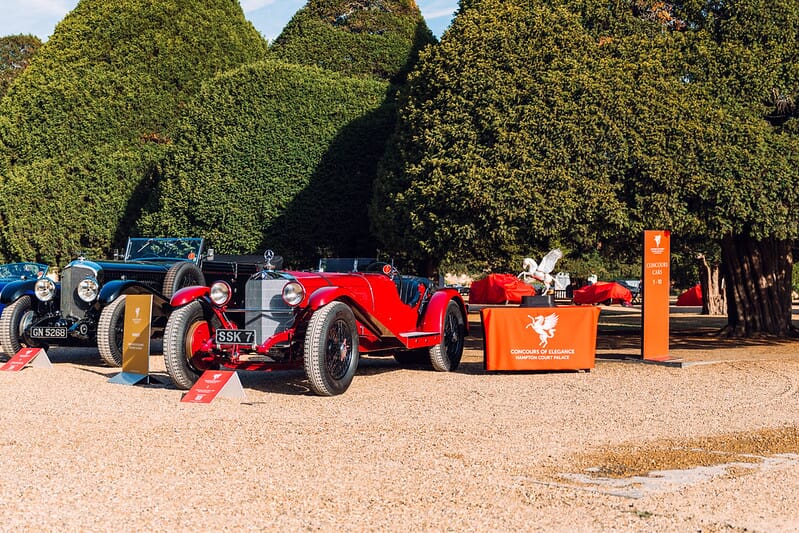
The coveted Best in Show award went to the 1928 Mercedes-Benz 710 SSK Rennwagen, chassis 36246. Unlike many international concours, the Hampton Court winner is chosen by the owners of the competing cars themselves, making the award particularly significant.
Originally built to competition specification, the SSK combines a shortened, agile chassis with a supercharged 7.1-litre straight-six producing approximately 250bhp in racing form. This particular car was delivered to Argentina, where it competed in events including the 500 Miles of Argentina and the Córdoba Grand Prix. Its racing career continued in South America until 1958, before it later appeared in historic competition in North America.
Despite its international history and appearances at events including Pebble Beach, Hampton Court marked the SSK’s first appearance at a UK event – and it departed with the ultimate prize.
Standout Performances from Aston Martin and Bentley
[Image credit: Tom Shaxson]
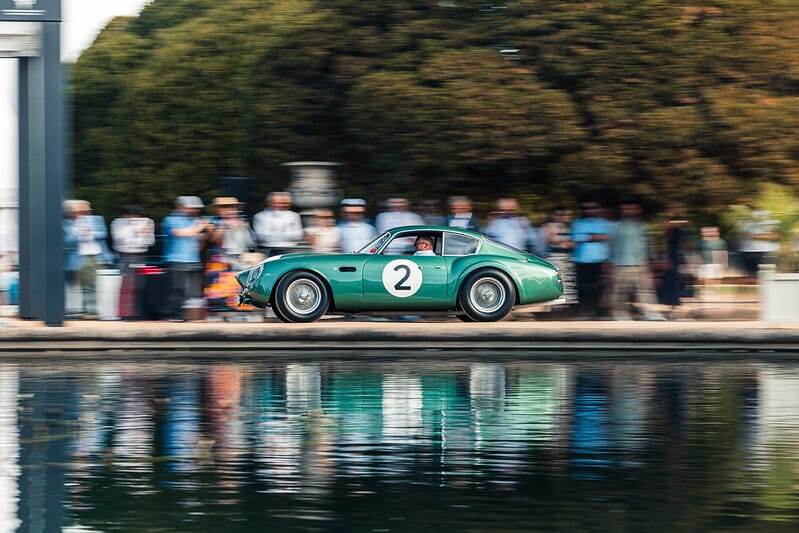
One of the weekend’s other great successes was the 1960 Aston Martin DB4 GT Zagato, better known by its registration, 1 VEV. It won both the 1960s category and the newly introduced Finest Aston Martin award. One of only four lightweight competition examples, 1 VEV combines Aston Martin’s shortened DB4 GT chassis with an aluminium body designed by Ercole Spada at Zagato. Its rarity, competition pedigree and unmistakable Italian coachwork made it one of the most important cars on display.
Bentley was also strongly represented. The 1927 Bentley 3-Litre Le Mans Team Car won both the 1920s class and the Finest Bentley award, while the Chairman’s Award went to the unique 1930 Bentley Speed Six All-Weather Tourer by Gill. The latter retains its original numbered mechanical components and the innovative Gill coachwork fitted when new.
Winners Across The Decades
[Image credit: Tom Shaxson]
The decade awards demonstrated the exceptional breadth of the field shown at Hampton Court Palace. A 1914 Humber TT took the pre-1920s category, while a 1938 Alfa Romeo 8C 2900 B won the 1930s class. The Alfa is believed to be the only 8C 2900 B fitted with cabriolet coachwork by Stabilimenti Farina, making the car not only very special but also extremely beautiful.
The 1940s award went to a 1947 Delahaye 135 MS, followed by a rare 1953 Siata 208 CS in the 1950s category. The Siata also received the Finest Italian Berlinetta award. The 1970s class was won by an exceptionally rare right-hand-drive Monteverdi 375 L High Speed, while the 1980 Lamborghini Countach LP 400 S took the following decade.
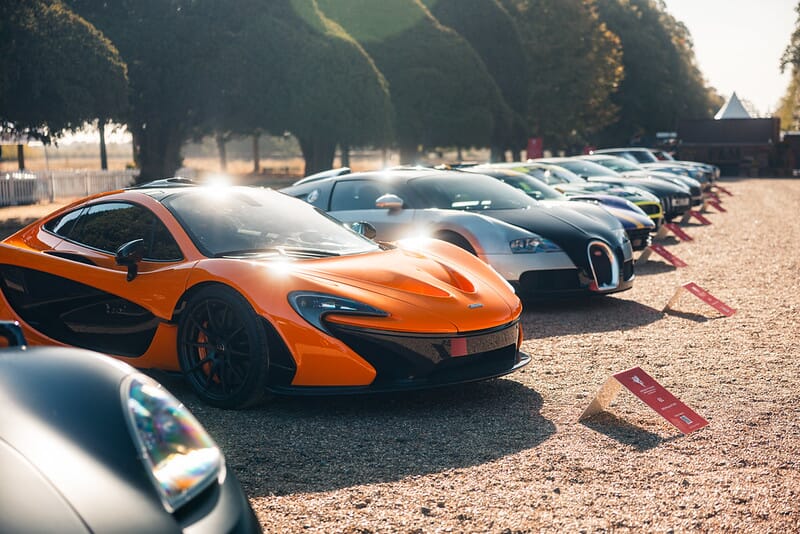
The Future Classics category produced an especially strong field, with the 2012 Aston Martin One-77 triumphing over a Bugatti Veyron 16.4 and the GMA T.50. Its victory reflects the growing recognition given to limited-production modern cars within serious collections – something Windrush has noticed, given the numbers of such cars coming into storage recently.
The event also looked towards the next generation of custodians. The Thirty Under 30 award was won by a 1972 Lamborghini Espada, with an Alpina C1, Mercedes-Benz 500 SEC and BMW 316 all highly commended.
Why does professional storage matter for concours-winning cars?

The Hampton Court results provided an important reminder that the finest cars are not distinguished by presentation alone. Provenance, originality, condition and sympathetic long-term care all play a vital role. Maintaining a significant car to concours standard begins long before it arrives on the show field. Secure, climate-controlled storage helps protect bodywork, interiors and mechanical components from fluctuations in temperature and humidity. Battery conditioning, tyre care and frequent inspections can prevent the gradual deterioration that otherwise occurs while a car is standing.
Just as importantly, professional storage creates continuity. Detailed condition records, careful preparation and appropriately managed use all help preserve a vehicle’s history and provide reassurance that it remains ready for the road, an event or its next concours appearance. This applies as much to emerging collectables as it does to established classics. Complex modern cars such as the One-77, Bugatti Veyron and GMA T.50 require particularly attentive storage, with their batteries, electronics, fluids and tyres all needing proper management during periods of inactivity.
At Windrush, we regard storage as an active process rather than simply providing a secure space. Every vehicle is looked after according to its individual requirements, helping clients preserve not only its condition and value, but also the history that makes it special.
The leading cars at Hampton Court have survived because successive owners have understood their role as custodians. From the SSK’s remarkable competition history to the originality of the Bentley Speed Six, each winner demonstrated what careful preservation can achieve – ensuring that important cars can continue to be driven, displayed and enjoyed for generations to come.



